
By Mel Fiorentino
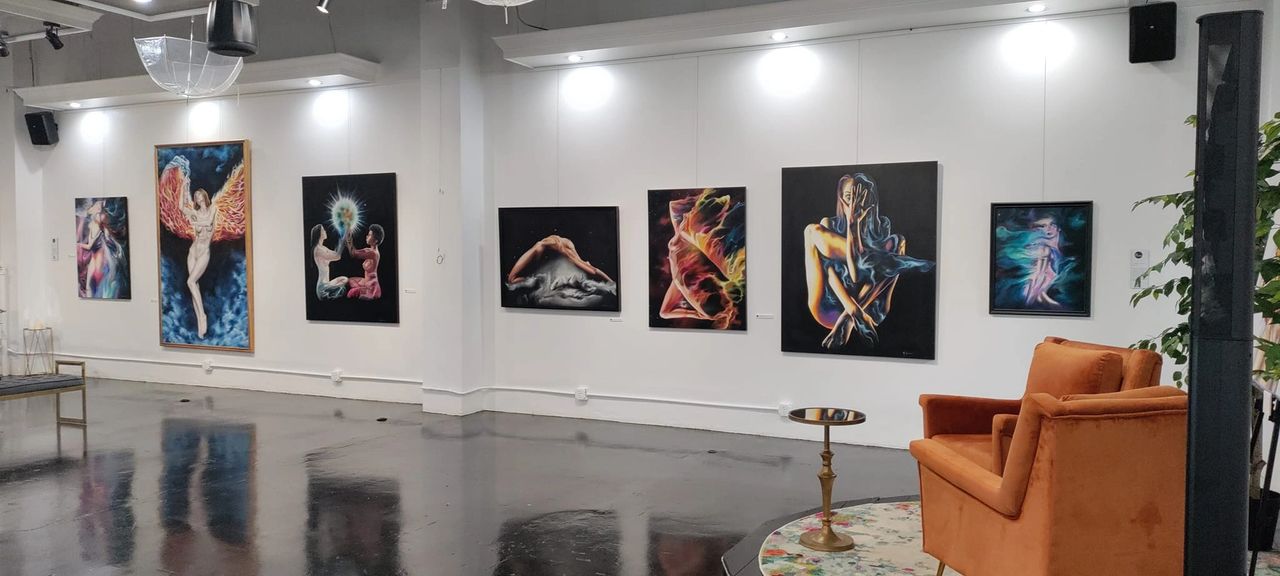
One of the most common things I see as an artist, educator, and gallery co-founder is incredible individual pieces that haven’t yet been given the chance to fully belong together. A strong body of work isn’t about repetition — it’s about intention, connection, and clarity.
If you’re preparing for a SOLO exhibition, a juried show, or even just your next creative chapter, learning how to move from a single idea to a cohesive collection can completely change how your work is experienced.
Start With a Question, Not an Outcome
Some of the most compelling collections begin with a question rather than a finished image. Ask yourself what you’re exploring: a feeling, a memory, a material, a tension, or a transformation. When the work is rooted in inquiry, each piece becomes part of an ongoing conversation rather than a standalone statement.
Let the idea guide you — not the pressure to impress.
Define the Emotional Thread
Cohesion doesn’t mean every piece looks the same. It means every piece feels related. Think about the emotional atmosphere you’re creating. Is it quiet, confrontational, tender, heavy, luminous, unsettled?
When an emotional thread is clear, variation becomes a strength rather than a distraction.
Choose Consistent Anchors
Anchors are the elements that quietly hold a body of work together. This might be:
- A limited or intentional color palette
- A repeated material or surface treatment
- A recurring figure, symbol, or spatial relationship
- A consistent scale or format
These anchors create rhythm, allowing viewers to move through the work with a sense of continuity.
Allow Evolution Without Losing Focus
A collection should evolve — but it shouldn’t wander. It’s okay if the first piece doesn’t look exactly like the last. Growth is part of the process. What matters is that the core idea remains intact, even as the work deepens.
If a piece doesn’t serve the conversation, it may belong to a different chapter.
Think Like a Viewer
When preparing a collection, step back and imagine someone encountering the work for the first time. How does the eye move? Where does the energy rise or rest? Are there moments of pause?
For SOLO exhibitions in particular, the goal is immersion. You’re not showing your range — you’re inviting someone into a world.
Edit With Care (and Courage)
Editing is one of the hardest and most important parts of building a collection. Not every strong piece belongs in every show. Choosing what to leave out is an act of clarity, not loss.
A focused collection is always more powerful than an overcrowded one.
From Studio to Exhibition
When artists present cohesive bodies of work, everything shifts — how the work is read, how it’s remembered, and how it’s collected. Whether you’re preparing for a SOLO exhibition, submitting to juried shows, or building toward a larger vision, cohesion allows your work to speak with confidence.
At NOMA Gallery, I love supporting artists at this stage — when ideas are becoming fully realized, and voices are coming into focus. The more intentional your collection is, the more clearly it will be seen.
—
Mel Fiorentino
Artist · Co-Founder & Owner, NOMA Gallery